Quails
Jumbo Golden
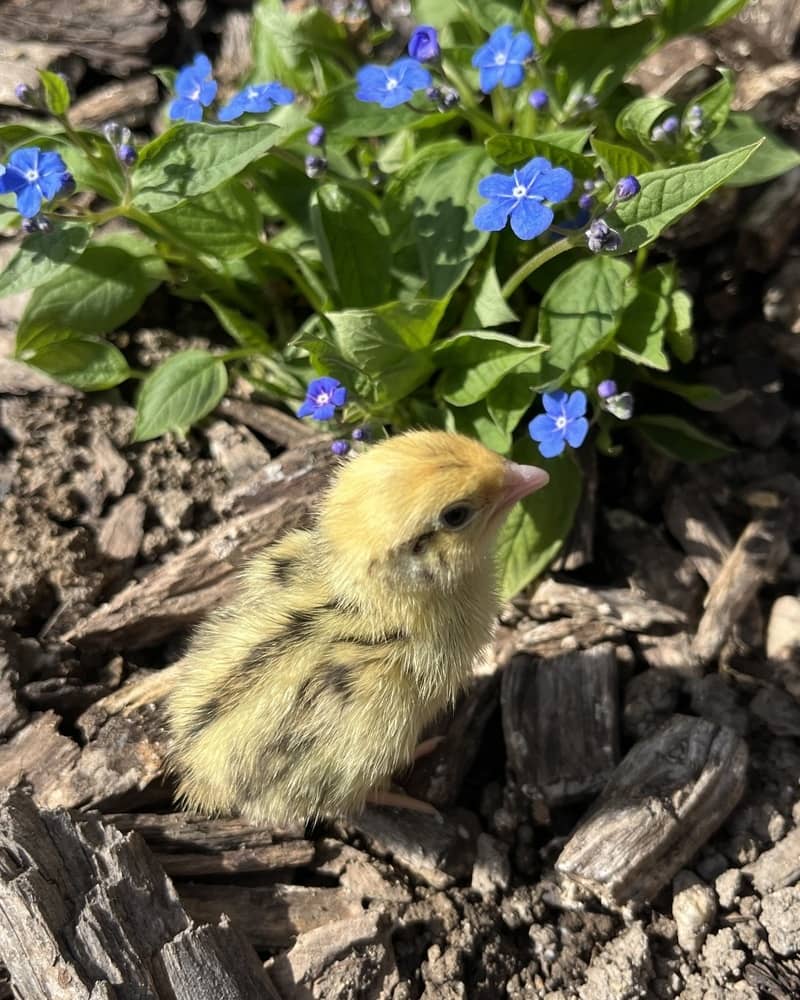
Jumbo Gold is a meat-and-egg Japanese quail (Coturnix japonica) weighing 400 to 450 g with striking golden plumage. We build this line by combining Manchurian and Italian genetics from Czechia and the Netherlands, which guarantees that 100% of chicks hatched from hatching eggs carry golden coloration, compared to only 50% in pure Italian lines. In terms of weight, it ranks among the largest lines in our flock, on par with Jumbo Pharaohs.

| Feather-sexable | ||
| Breed true to color | 100% | |
| Body weight | ||
| Egg weight | ||
| Egg production | ||
Appearance
The Italian Golden Japanese quail is characterized by its elegant coloration and feather pattern. These quails have a base yellow coloration with black and reddish markings, creating striking contrasts in the plumage.
This golden pattern is more pronounced in females, which have typical black spots on their breasts. Males have a distinctive dark reddish head, while females only have a stripe running from the cheek to the back of the head. Females also have black spots on their breasts, which are absent in males.
The Manchurian Golden Japanese quail has a lighter straw-colored plumage and compared to the Italian variant, features fewer or sometimes no black feather lines.
Characteristics
- Sexual Dimorphism
- Males differ from females with a distinctive rusty-orange color on the head and breast, which is smooth and spotless. Females have a creamy underside with black spots (fewer or none in Manchurian types), clearly distinguishing them from males.
- Jumbo Size
- In this line, we achieved larger body and egg sizes through selective breeding.
"The size of our quails and their eggs is limited by their overall health."
We do not aim to increase the size of our quails at any cost for the sake of producing the largest possible eggs and the most meat. An oversized quail will never be truly healthy, and an egg that is too large may be impossible for the bird to lay, which can lead to premature death.
Naming
Internationally, this variety is referred to as Italian / Manchurian, which in Slovak translates to Talianska / Mandžuská. Thanks to its golden coloration, it is also often called Golden, and in jumbo form, it is attractively marketed as Italian Giant. The term Fawn comes from the gene responsible for this coloration. More about the Fawn gene at Pips n Chicks.