Hatching Quail Eggs: Temperature & Schedule
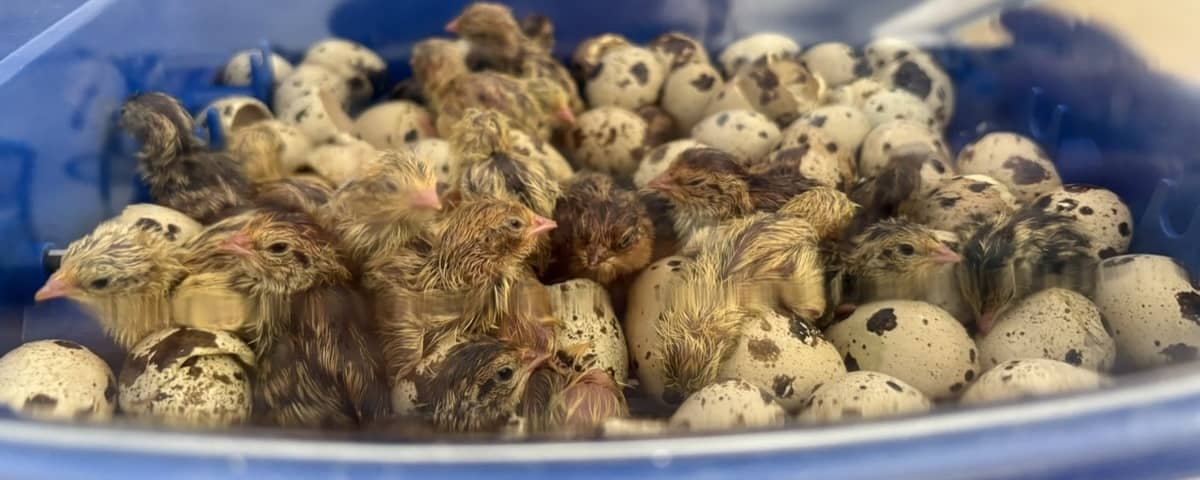
You have selected and properly stored your hatching eggs? Excellent. Now comes the most important part - the incubation itself. The next 17 to 18 days will determine how many healthy chicks will hatch. In this article, you will find exact temperature and humidity values backed by scientific research, a turning schedule, and a complete day-by-day guide from the first day to hatching.
Incubator Setup
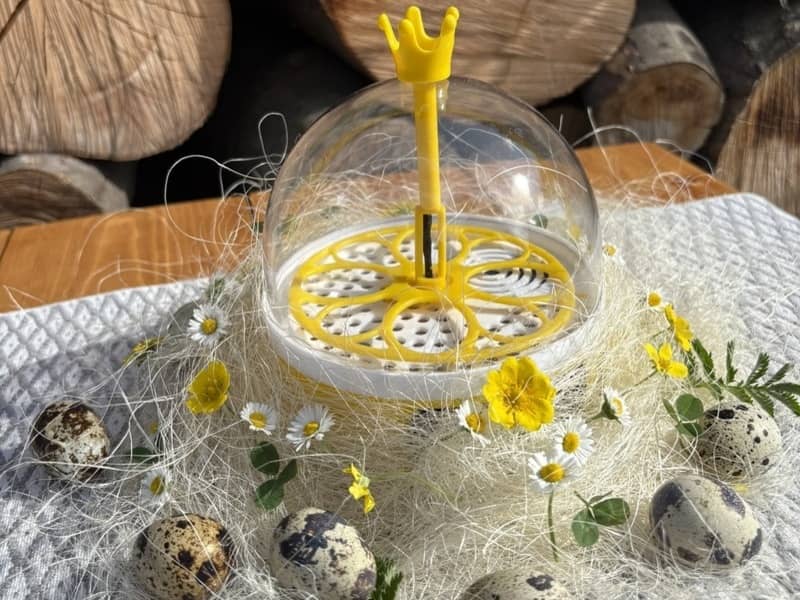
Before first use, verify the accuracy of the thermometer and hygrometer in your incubator. Ideally, compare them against a calibrated instrument. If you don't have a certified measuring device, use at least two or three regular thermometers and compare the readings. Some higher-quality incubators come with pre-calibrated sensors. Place the incubator on a stable surface away from direct sunlight, drafts, and heat sources. Room temperature should be around 20 to 25 °C.
Key Parameters
Temperature
Humidity
Turning
Incubation period
Start of Incubation
Place the tempered eggs in the incubator pointed end down or on their side. Set the temperature to 37.7 °C and humidity to 40 %. Turn on the automatic turner or set a reminder to turn manually 3 to 5 times daily. The embryo begins developing and the heart starts beating within the first 48 hours.
Why Exactly 37.7 °C?
Temperature is the most critical factor in incubation. Even a small deviation significantly affects the outcome. A scientific study on Japanese quails tested various temperatures and confirmed that the optimum lies within a narrow range of 37 - 38 °C.
| Temperature | Hatchability | Note |
|---|---|---|
| 34 °C | 0 % | No eggs hatched |
| 35 °C | Nearly 0 % | Too cold |
| 36 °C | ~50 % | Well below optimum |
| 37 °C | 76.6 % | Close to optimum |
| 38 °C | 80.7 % | Highest hatchability |
| 39 °C | ~57 % | Declining |
| 40 °C | ~50 % | Significant decline |
| 41 °C | Nearly 0 % | Too hot |
Candling
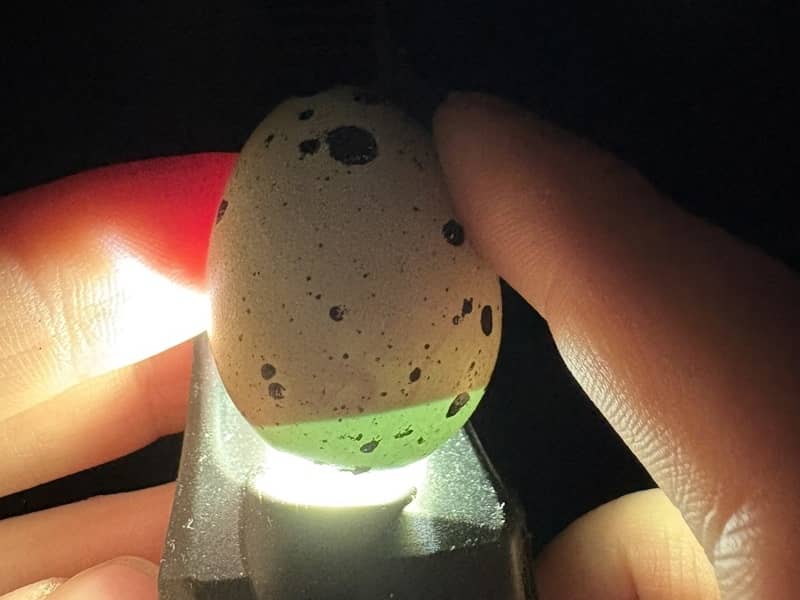
Candling is the process of checking embryo development using a strong focused light. With quail eggs, we do not recommend candling on day 7. The shell is dark and heavily speckled, making it nearly impossible to see anything through it. Unlike chicken eggs, where the embryo is clearly visible at this stage, with quail eggs it is mostly guesswork. If you want to candle, wait until day 14 when the embryo is large enough to be visible even through the dark shell.
Final Check
If you decide to candle, this is the right day. The embryo should fill most of the egg with a visible air cell at the blunt end. Some breeders recommend removing dead embryos due to the risk of them exploding in the incubator. In our years of hatching, this has never happened to us. With a larger number of eggs in the incubator, candling would cause significant cooling and we see no real benefit, so we personally do not candle even on day 14. This is the last day of turning.
Lockdown
Stop turning the eggs and increase humidity to 60 - 65 %. From this moment, do not open the incubator. The chicks rotate into hatching position and prepare to pip.
Do not open the incubator during lockdown (days 15 - 18)! Every opening causes a rapid humidity drop, which can cause the membrane to stick to the chick and lead to its death.
Hatching
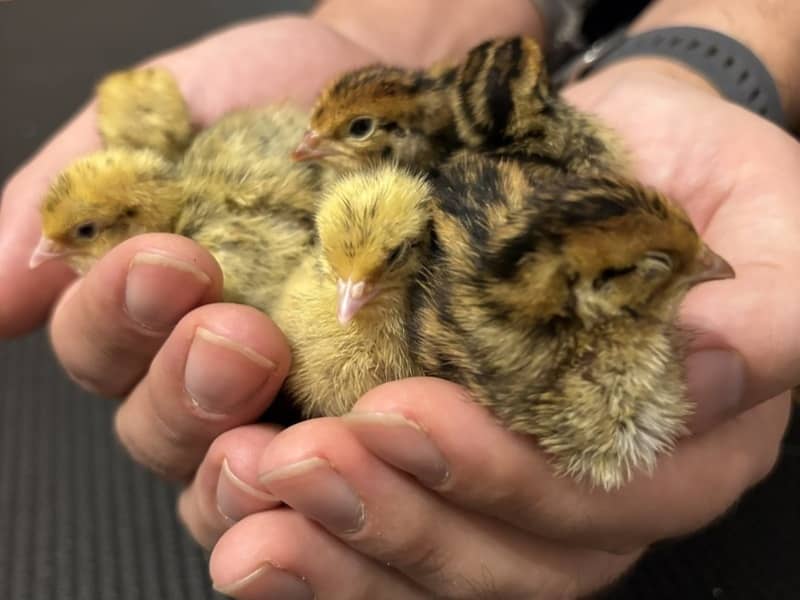
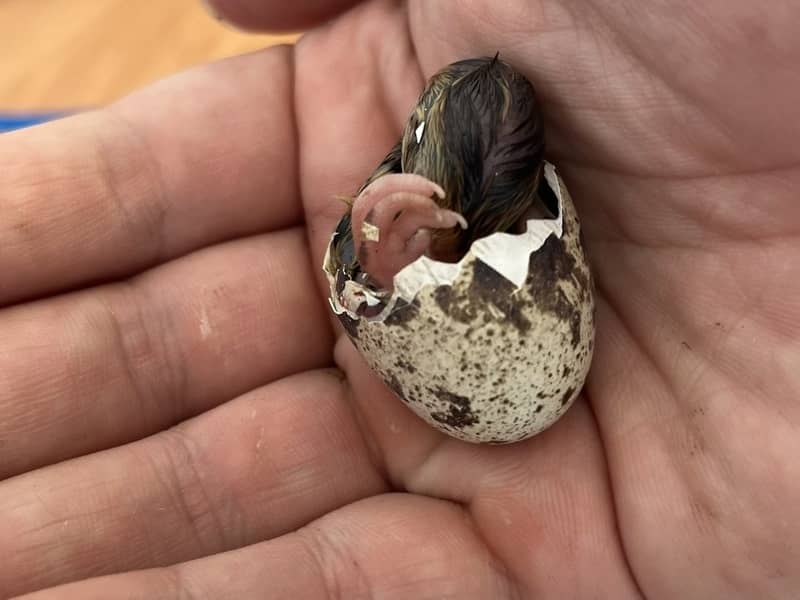
The chicks begin pipping through the shell and gradually emerge. Leave them in the incubator until they are completely dry. They can survive without food or water for 24 hours thanks to the absorbed yolk sac. Then move them to a preheated brooder.
Most Common Beginner Mistakes
- Opening the incubator during lockdown - humidity drops within seconds and the membrane dries out.
- Inaccurate thermometer - even a 0.5 °C deviation significantly affects hatch rates. Always calibrate with an external thermometer.
- Too high humidity during days 1 - 14 - the air cell does not form properly and the chick may drown during pipping.
- Forgetting to turn eggs - the embryo sticks to the membrane, causing deformities or death.
- Incubator near a window or radiator - room temperature fluctuations disrupt the stability inside the incubator.
- Helping chicks hatch - if blood vessels are still visible on the membrane, the chick is not ready and intervention will cause harm.
Ready to start incubating? Order proven hatching eggs directly from our farm. We take care of selection, storage and preparation for you.
Order hatching eggsWith a properly set incubator and quality hatching eggs, you can expect a 75 - 80 % hatch rate. For eggs shipped by post, expect around 50 % due to vibrations during transport.
Japanese quail breeder and founder of Cipinkovo, focused on genetics and selective breeding. I write about what I have learned over years of practice.