Quail in Hieroglyphs: The Secret of Ancient Egypt
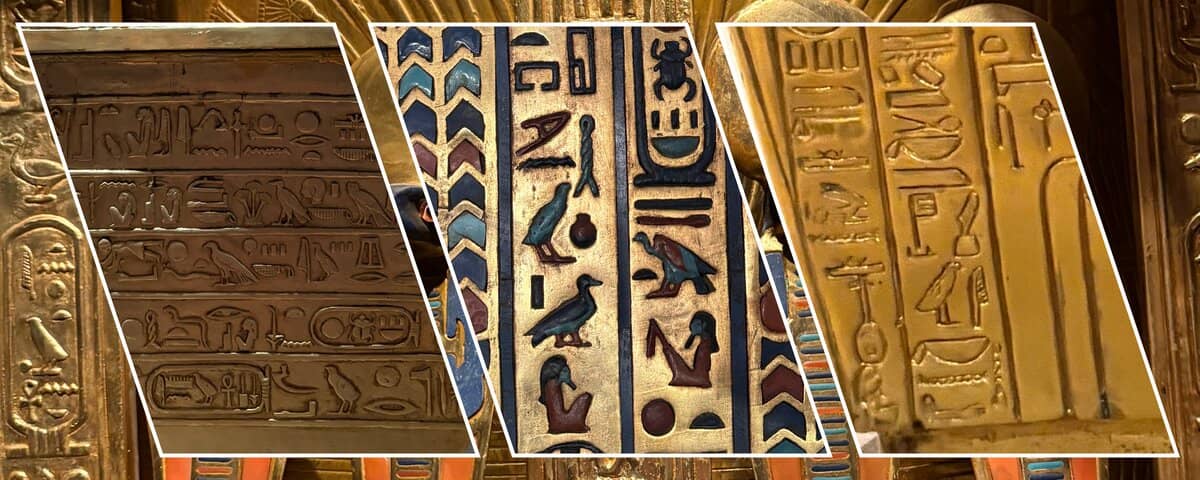
Pyramids, pharaohs, hieroglyphs. Quail probably wouldn't come to mind when thinking about Egypt. But the Egyptians made it one of the 24 letters of their alphabet. The quail chick hieroglyph represented the sound W and was used continuously for nearly 3,500 years.
The Quail as a Letter of the Alphabet
Egyptians had three types of signs: whole words, individual sounds, and meaning clarifiers. The quail chick was a sound sign, one of the 24 core signs where one picture meant one sound. Something like our alphabet.
The reading direction of hieroglyphs was determined by which way the animals and figures faced. The quail always looks toward the beginning of the text, so if it faces left, you read left to right.
Hieroglyph Variants
The quail chick, known in Egyptology as sign G43 in Gardiner's classification, did not only appear on its own. Egyptians combined it with other signs to create new sounds and words.
The Quail Hidden in Egyptian Words
Sunrise, power, priesthood, nature. The quail chick hieroglyph is hidden in all of them.
The Sun rises on the horizon. This was the ritual greeting of each new day. Every morning in ancient Egypt symbolically began with a quail.
The priestly title literally meant pure person. Priests shaved their bodies, wore white linen robes, and performed ritual purifications in temples.
Meant green, fresh, prosperous. The colour of papyrus and a symbol of new life in the Nile delta. Goddess Wadjet, protector of pharaohs, derived her name from this word.
The Was sceptre, a staff with a jackal head, was a symbol of divine power. Carried by gods, pharaohs, and priests since the first dynasty (~3,100 BCE).
Tutankhamun and the Quail in a Pharaoh's Name
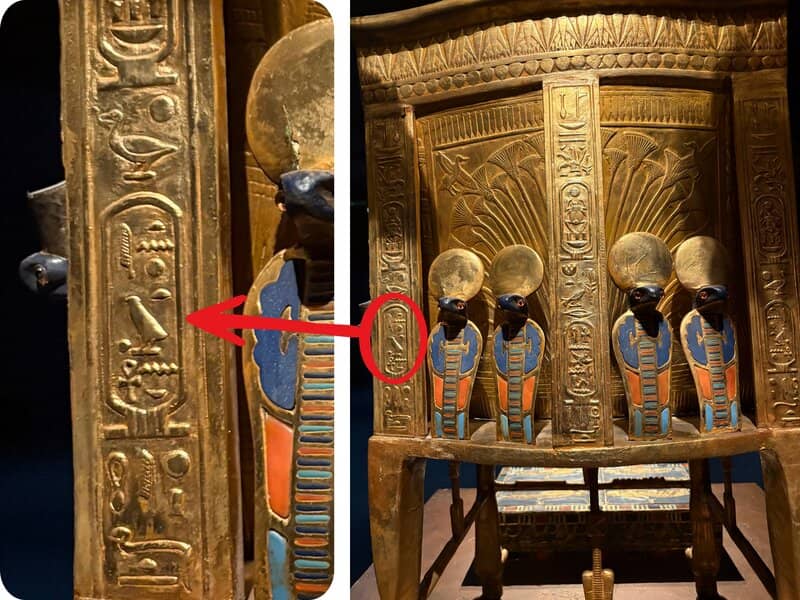
The most famous pharaoh's name means living image of Amun. The first word, image (twt), contains the quail hieroglyph right in the middle. Every time Egyptian scribes wrote Tutankhamun's name, they drew a little quail chick.
Goddess Wadjet, The Green Protector
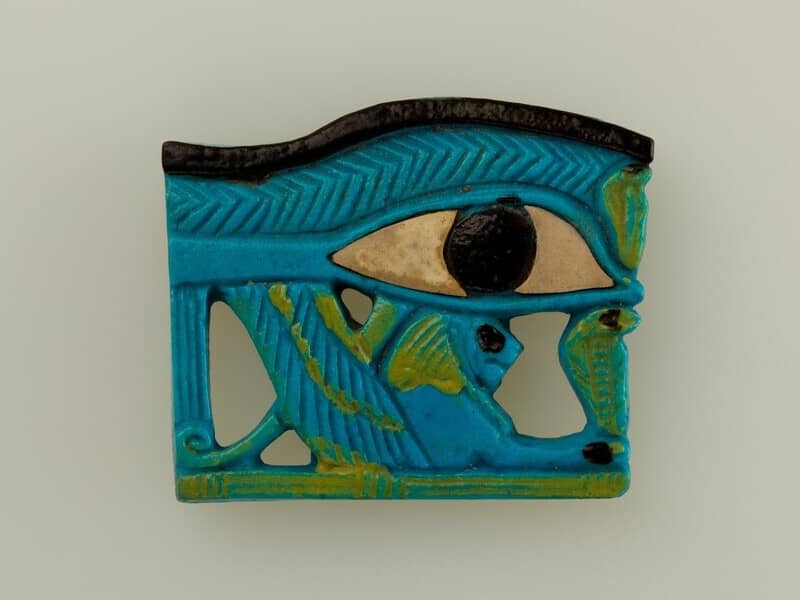
The name of goddess Wadjet literally means The Green One. It is derived from the word for the colour green, which begins with the quail hieroglyph. Wadjet was originally a local goddess of the city of Buto in Lower Egypt.
In the form of a cobra, known as the uraeus, she sat on the pharaoh's forehead to protect him from enemies. After the unification of Egypt, together with goddess Nekhbet (the vulture of Upper Egypt), she formed the pharaoh's double crown. Her eye, known as the Wedjat Eye, became one of the most widespread protective symbols.
Why Is the Quail Called "Pharaoh"
Every autumn, millions of quail fly across the Mediterranean Sea and land exhausted on the Egyptian coast. This predictable annual arrival was one of the most important hunting seasons for the Egyptians. In 2012 alone, an estimated 3.4 million birds were caught in northern Sinai. The quail has been linked to Egypt for millennia.
When the Japanese quail (Coturnix japonica) spread to Europe and America in the 20th century, breeders named its original wild-type colouring Pharaoh. In various countries, this species was also called Nile quail or Bible quail. All of these names point back to Egypt.
The name Pharaoh therefore does not refer to colouring or a specific breeder. It is a tribute to the millennia-old relationship between the quail and the land of the pyramids, one that began in hieroglyphs and continues today in the name of the most widespread breeding variety in the world.
We also raise quail with the Pharaoh name. See what they look like:
Japanese quail breeder and founder of Cipinkovo, focused on genetics and selective breeding. I write about what I have learned over years of practice.