Keeping Quail in Winter: How to Keep Them Laying
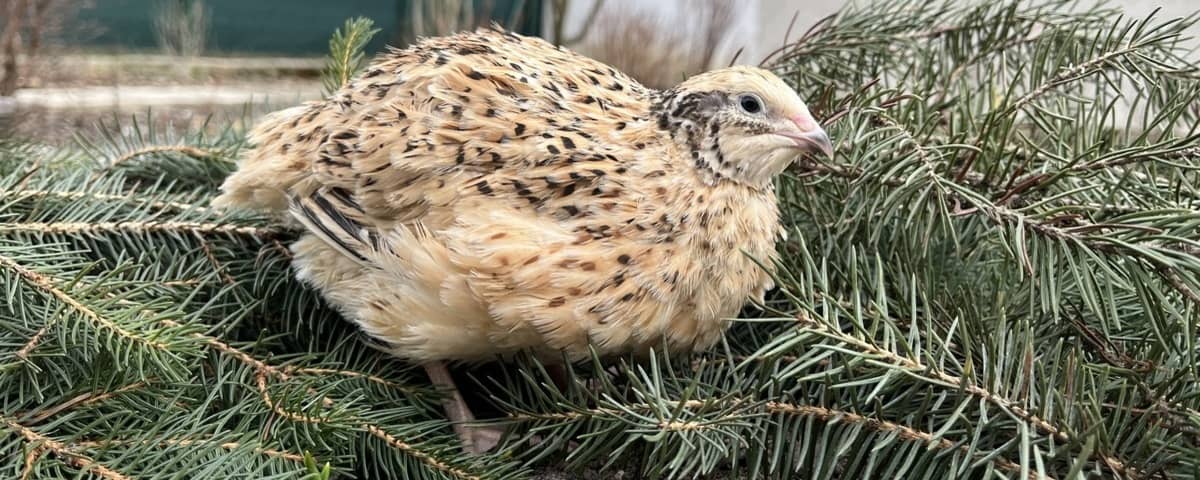
Lighting: 16 hours of light a day
Japanese quail need 14 to 16 hours of light a day to keep laying steadily. Our quail have an LED strip on a timer from 6:00 am until sunrise and again from sunset until 10:00 pm, 16 hours in total.
Bright light is not necessary. In a Brazilian trial on Japanese quail, just 5 lux was enough for high egg production, so what matters is the length of the day, not the wattage of the bulb.
Source: UNESPLighting around the clock does not pay off, though, because quail need a night to rest too. If laying has already dropped, extend the day gradually, by roughly one hour per day. Most quail then start laying again within 1 to 3 weeks.
Source: Forget Me Not Quail Farm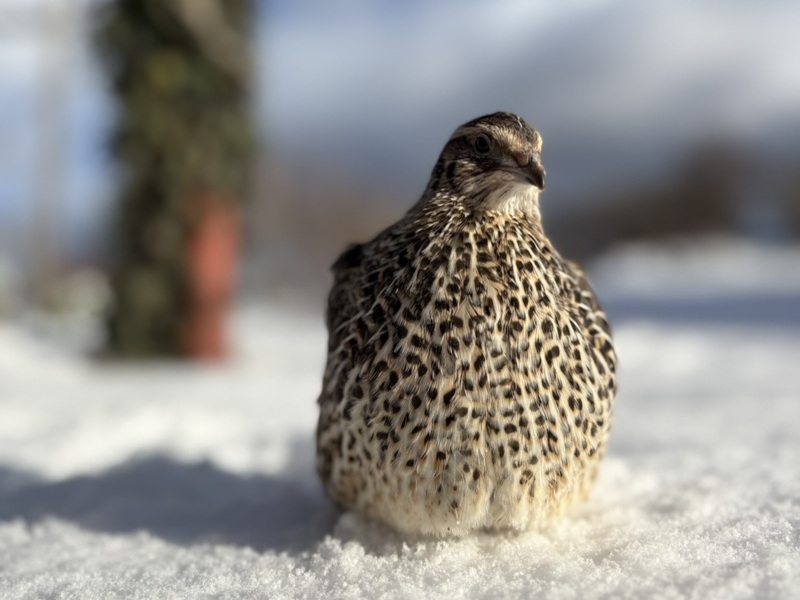
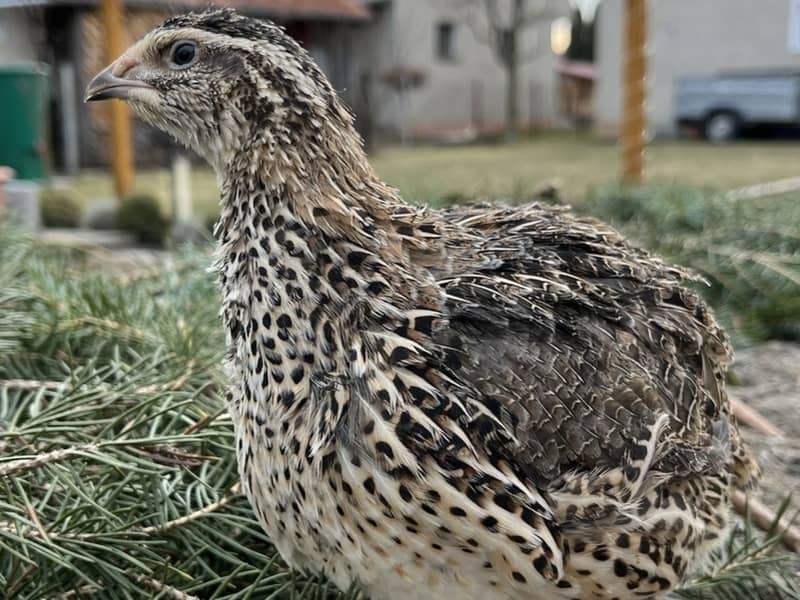
Heating: we do not heat at all
Our quail spend the winter indoors, where the temperature never drops below 10 °C (50 °F) even in the hardest frosts, and we do not heat for them at all. Quail keep themselves warm: they fluff up their feathers, move less and huddle together. Heating would not add a single egg, it would only raise costs and risks.
Japanese quail feel best at around 21 to 23 °C (70 to 73 °F). Researchers studying how temperature affects quail egg production also use this range as the comfort zone.
Source: Vercese et al. 2012Adult quail that have gradually adapted to the cold can handle frosts of around -15 °C (5 °F), as long as they are kept dry and out of drafts.
Source: Forget Me Not Quail FarmA heat lamp in a wooden hutch or a hay loft is one of the most common causes of fires in small flocks. On top of that, quail get used to artificial heat, and if the power goes out on a freezing night, the sudden cold hits them far harder than a flock that was never heated.
Feed: more energy for winter
The foundation stays the same: a complete quail feed, available free choice. In the cold, quail eat more, because part of the energy goes into keeping their body temperature up. That is why it makes sense to add something higher in fat to the winter diet.
We add dried black soldier fly larvae from our shop, which contain more fat than other insects and plenty of protein as well. We give them 2 to 3 times a week, crushed for the quail. Sunflower seeds are another good source of extra fat, and therefore of energy for keeping warm. You can read more about what insects bring to quail according to research in our article Insects for Quail.
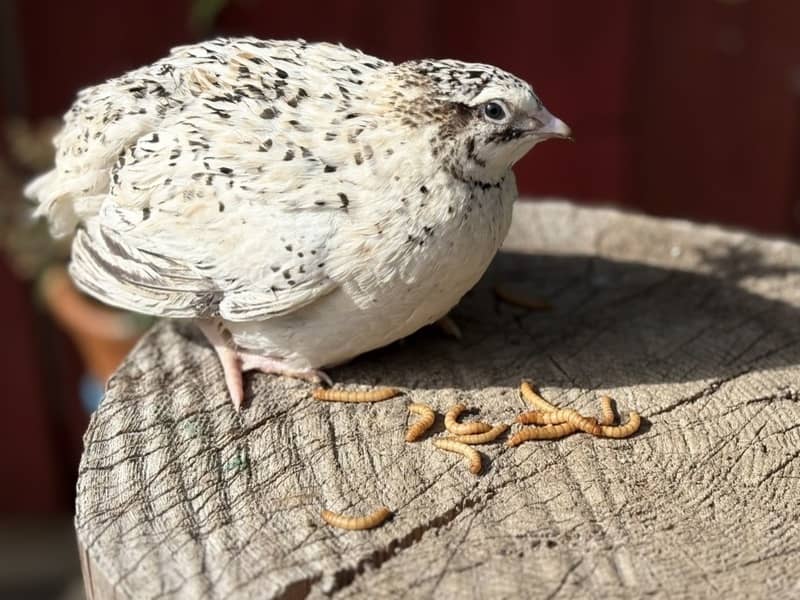
Sprouted wheat or barley is a good substitute for fresh greens in winter.

Ventilation: ammonia and humidity
When it is cold outside, keepers tend to shut the quail room as tightly as possible. That is exactly when ammonia from droppings and moisture from breathing and drinkers build up in the air. For quail, damp and stale air in winter is a bigger risk than the cold itself.
The highest ammonia levels in poultry housing are measured during the cold season, when there is less ventilation. Ammonia damages the airways and makes birds more prone to infections.
Source: PMCWinter overview: what we do and what sources recommend
The four things that decide whether quail keep laying in winter, all in one place.
| Area | Our flock | Recommendation |
|---|---|---|
| Light | LED strip, 6:00 am to sunrise, sunset to 10:00 pm (16 h) | 14 to 16 h a day, a few lux is enough, not 24 h |
| Temperature | Indoors, no heating, never below 10 °C (50 °F) | Best at 15 to 24 °C (59 to 75 °F), they tolerate cold if dry and draft-free |
| Feed | Complete feed + dried black soldier fly larvae 2 to 3 times a week | Complete quail feed free choice, treats max. 10 % |
| Ventilation | Window open all year round | Ventilate in winter too, so ammonia and moisture do not build up |